Last year, I assigned now-retired Deputy Chief Kevin Masters to look at our department’s deployment to determine the best way to combat violent crime. He created a proposal that we modified to best meet the department’s and city’s needs. This resulted in the creation of the Area Command concept. One small group of officers started employing this idea a few weeks ago in the East Patrol Division. The below article in this month’s Informant newsletter explains more about that initial piece and what we hope the future of Area Command will be.
A new initiative will target violent crime in the city’s worst-hit areas with an added boost to speed up prosecution.
Chief Darryl Forté approved an East Patrol Division pilot program called the Area Command Unit (ACU).
“The ACU will attack violent crime while simultaneously building and maintaining positive community relations,” according to a January 14 department memo. “The ACU will rely on real-time data from several sources and will partner with Kansas City No Violence Alliance (KC NoVA) and the Law Enforcement Resource Center (LERC).”
Captain Todd Paulson of the East Patrol Division currently is commanding the EPD evening shift and the Area Command pilot program. He will transfer just to ACU soon.
“The unit will work closely with other units on the department, as well as city and county services such as city codes and Jackson County COMBAT,” Captain Paulson said.
The pilot unit is made up of a sergeant, five officers and a detective.
“It’s nice because we have officers who have come from different areas and with a whole lot of different experiences,” said Officer Bryan Britten of the East Patrol Division.
Having a detective assigned directly to a patrol support element is unique, as well.
“This allows the unit to file its own cases and apply for search warrants and to speed up the prosecution process to make a quicker impact on improving neighborhoods,” Paulson said.
He said the officers will be active in self-initiated activity with a good knowledge of the people involved in violent crime.
“They need to be self-motivated, hard-working and be able to interact with the community in a positive way,” Paulson said.
Unlike regular patrol officers, ACU officers will not focus on calls for service, but will work specific targets within the entire division that are involved in violent crime.
The Area Command pilot program shifts start between 2 and 4 p.m., 7 days a week.
“The units will be able to move and address violent crime issues in other divisions should the need arise,” said Paulson.
ACU has several aims.
“Our main goal is to get as many guns off the streets as we can,” Officer Britten said.
Captain Paulson said ACU also wants to reduce violent crime while partnering with the community to accomplish it.
“By focusing on and prosecuting those directly involved in violent crime, we will be able to interrupt the criminal networks in the city,” he said.
The Area Command pilot program already is proving to be a success. Just in January, they recovered: 11 guns, three stolen vehicles, 19 grams of cocaine, 56 grams of meth, 534 grams of marijuana, 12 ounces of PCP and $3,032 in cash. ACU will grow to encompass the other inner-city patrol divisions.
“The overall unit is already expanding to the Central and Metro Patrol Divisions, hopefully by the end of February, and will consist of a captain, four sergeants, 18 officers and three detectives,” Paulson said. “Each unit will be housed at its respective division station to stay responsive to the needs of each station and to be able to interact and pass on information to the officers in those divisions.”
The Area Command initiative is approved for one year, and at the end of the year, it will be fully evaluated and recommendations will be made at that time to dissolve or expand the unit, according to the Jan. 14 memo.
Send comments to kcpdchiefblog@kcpd.org.

Showing posts with label Informant. Show all posts
Showing posts with label Informant. Show all posts
Tuesday, February 19, 2013
Monday, October 8, 2012
Best wishes to Deputy Chief Kevin Masters
After 27 years of service to the Kansas City Missouri Police Department, Deputy Chief Kevin Masters is retiring today. I thank him for all he has done for this police department and the community. Below is a story from our latest Informant newsletter describing what he has accomplished and what he has meant to this department and Kansas City:
One of the department's youngest-ever commanders to be named deputy chief will retire from KCPD on Oct. 8 with 27 years of service.
When Deputy Chief Kevin Masters joined the police department in 1985, he had a degree in communications and journalism and dreamed of working in the Media Relations Unit.
"When I got in the field at Metro Patrol, it was a whole different story," he said. "At that point, media became a passing fancy."
He started as a dispatcher to get his foot in the door to Media, but the excitement of what he heard on the radio – as well as a couple persuasive recruiters— got him to enter the Academy. As soon as he hit the streets, Masters said he was hooked.
"It was so much fun," he said. "We were making lots of arrests. And I really like people, and I was getting to know a lot of people. Being on the streets energized me and really fit my personality."
After five years in patrol, D.C. Masters became a homicide detective. He said that assignment gave him the biggest range of emotion he has experienced.
"There is no worse feeling than going into someone's house, looking them in the eye and telling them their loved one has been killed," he said. "... But the most rewarding feeling is when you can go back to that same person and tell them you found who did it, and you're going to get justice for them."
Knowing what he went through emotionally, Masters said he made it a priority as commander of the Investigations Bureau to improve homicide detectives' quality of life. He worked with his staff to re-organize the unit in 2011 to give detectives more time and resources to solve cases as well as more time with their families. Homicide clearance rates have improved steadily since the change. Masters said that change is one of the most personally meaningful of his career accomplishments.
After he was a detective, Masters climbed the ranks quickly. Now-Retired Chief Rick Easley promoted him to deputy chief in 2002. Masters had been on the department for 17 years at the time and was 38 years old.
"Kevin was always a hard worker and extremely dependable," Easley said. "He always gave me the impression he was working hard at trying to do the right thing."
Easley said Masters could think on his feet, made good decisions and dealt well with others. But not everyone was excited to see such a new, young face as deputy chief. Masters said he faced some backlash, but he knew he'd earned the spot.
"I worked my tail off everywhere I went," he said. "I've always put in an honest day's work for an honest day's pay."
Among some of his accomplishments were the implementation and development of the Shoal Creek Patrol Division and the Mounted Patrol Unit.
Through it all, Masters said he most liked meeting people— from Fortune 500 Company CEOs to people at the end of their ropes. That's why he's looking forward to his new job as director of government relations for the Kansas City Missouri School District.
Masters will be the main point of contact for the district for elected officials at the local, state and federal levels. But what he's most excited about will be his duties building relationships between the district's schools and the neighborhoods around them. He will be trying to connect school administrators to the business owners and residents of the communities they serve.
And although Masters never worked in Media Relations at KCPD, he said he got to use the communication skills he learned in many facets of his job.
"It has been a very rewarding experience," he said. "My life has been blessed personally and professionally."
Send comments to kcpdchiefblog@kcpd.org.
One of the department's youngest-ever commanders to be named deputy chief will retire from KCPD on Oct. 8 with 27 years of service.
When Deputy Chief Kevin Masters joined the police department in 1985, he had a degree in communications and journalism and dreamed of working in the Media Relations Unit.
"When I got in the field at Metro Patrol, it was a whole different story," he said. "At that point, media became a passing fancy."
He started as a dispatcher to get his foot in the door to Media, but the excitement of what he heard on the radio – as well as a couple persuasive recruiters— got him to enter the Academy. As soon as he hit the streets, Masters said he was hooked.
"It was so much fun," he said. "We were making lots of arrests. And I really like people, and I was getting to know a lot of people. Being on the streets energized me and really fit my personality."
After five years in patrol, D.C. Masters became a homicide detective. He said that assignment gave him the biggest range of emotion he has experienced.
"There is no worse feeling than going into someone's house, looking them in the eye and telling them their loved one has been killed," he said. "... But the most rewarding feeling is when you can go back to that same person and tell them you found who did it, and you're going to get justice for them."
Knowing what he went through emotionally, Masters said he made it a priority as commander of the Investigations Bureau to improve homicide detectives' quality of life. He worked with his staff to re-organize the unit in 2011 to give detectives more time and resources to solve cases as well as more time with their families. Homicide clearance rates have improved steadily since the change. Masters said that change is one of the most personally meaningful of his career accomplishments.
After he was a detective, Masters climbed the ranks quickly. Now-Retired Chief Rick Easley promoted him to deputy chief in 2002. Masters had been on the department for 17 years at the time and was 38 years old.
"Kevin was always a hard worker and extremely dependable," Easley said. "He always gave me the impression he was working hard at trying to do the right thing."
Easley said Masters could think on his feet, made good decisions and dealt well with others. But not everyone was excited to see such a new, young face as deputy chief. Masters said he faced some backlash, but he knew he'd earned the spot.
"I worked my tail off everywhere I went," he said. "I've always put in an honest day's work for an honest day's pay."
Among some of his accomplishments were the implementation and development of the Shoal Creek Patrol Division and the Mounted Patrol Unit.
Through it all, Masters said he most liked meeting people— from Fortune 500 Company CEOs to people at the end of their ropes. That's why he's looking forward to his new job as director of government relations for the Kansas City Missouri School District.
Masters will be the main point of contact for the district for elected officials at the local, state and federal levels. But what he's most excited about will be his duties building relationships between the district's schools and the neighborhoods around them. He will be trying to connect school administrators to the business owners and residents of the communities they serve.
And although Masters never worked in Media Relations at KCPD, he said he got to use the communication skills he learned in many facets of his job.
"It has been a very rewarding experience," he said. "My life has been blessed personally and professionally."
Send comments to kcpdchiefblog@kcpd.org.


Wednesday, February 8, 2012
KCPD to test many possible patrol cars
As many of you have heard, Ford has stopped producing the Crown Victoria - the American police car standard. Nearly every law enforcement agency in the nation now is faced with choosing what kind of vehicles to purchase next, and this story from our February Informant newsletter explains how KCPD will go about our decision. See pictures of the contenders at the end of the article:
Kansas City Police aren’t going to buy just one type of car to replace the now-defunct Crown Victoria: they’re going to buy five.
KCPD will purchase 6 to 12 cars each of the following types of vehicles in the 2012-13 fiscal year: Dodge Charger Pursuits, Ford Interceptor Sedans, Ford Interceptor Sport Utility Vehicles, Police Package Chevrolet Tahoes and Police Package Chevrolet Caprices. The department already has at least one Charger, Tahoe and Caprice for testing. The new Ford products just went into production in January.
“We need to find out what works best for our agency,” said Captain Don Sight, commander of the Fleet Operations Unit.
When Ford stopped making their iconic police cruiser in 2011, law enforcement agencies across the country were left to make a decision about what to replace them with. Other automobile manufacturers saw this as an opportunity to jump into the police car market. Sight said it wouldn’t be prudent to pick just one type of car right now to replace KCPD’s fleet of 502 patrol cars, most of which are Crown Victorias.
“We’re going to need to know how they’ll be at 100,000, 120,000 miles,” he said, noting that most KCPD cars get retired after hitting about 150,000 miles. “We fully expect all of these cars to function great on the highway … but we need to know how they’re going to hold up in the stop-and-go traffic of the inner city and when they hit curbs and things like that.”
Sight said the department also needs to learn how the cars do in a variety of weather conditions.
“We have all four seasons here,” he said.
All vehicles being tested will have traction control, which Sight said will give them better winter performance than Crown Victorias. The two Ford vehicles are all-wheel drive. The others are rear-wheel drive.
Fleet Operations will carefully study the cost per mile of each type of vehicle, a figure that entails fuel usage, maintenance costs and more. They also plan to solicit a lot of input from the officers who will drive the cars.
Fleet Supervisor Darrell Cooper said the new models could start getting deployed in late March, early April. Many will go to officers in the three urban patrol divisions to better test how they hold up to city driving. One of each also will go to the Drivers Training Section at the Academy.
KCPD has driven the Crown Vic almost exclusively for the last 20 years. Captain Sight said citizens will have to adjust to seeing a new style of police car on the road, just as they did when the department switched from Dodge Diplomats/Plymouth Gran Furies to the Crown Victoria in the 1980s. But some things will remain the same. The cars will still be navy colored and will feature “Police KCMO” door graphics similar to current models, although Cooper said the graphics are going to get some tweaking.
Fleet Supervisor Mark Crawford said there will undoubtedly be a learning curve for KCPD’s mechanics, most of whom have serviced primarily Crown Victorias for two decades and will have to learn five new types of vehicles. But he doesn’t expect the curve to be that steep because the technicians already work on a variety of specialty and leased vehicles.
Captain Sight said it could be several years before KCPD decides on one type of vehicle.
“Hopefully something will stand out,” he said.


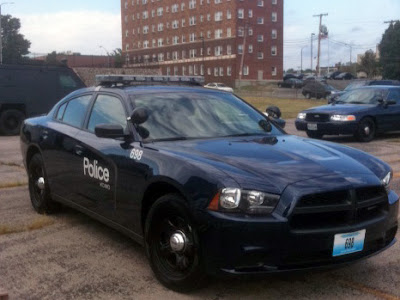
Kansas City Police aren’t going to buy just one type of car to replace the now-defunct Crown Victoria: they’re going to buy five.
KCPD will purchase 6 to 12 cars each of the following types of vehicles in the 2012-13 fiscal year: Dodge Charger Pursuits, Ford Interceptor Sedans, Ford Interceptor Sport Utility Vehicles, Police Package Chevrolet Tahoes and Police Package Chevrolet Caprices. The department already has at least one Charger, Tahoe and Caprice for testing. The new Ford products just went into production in January.
“We need to find out what works best for our agency,” said Captain Don Sight, commander of the Fleet Operations Unit.
When Ford stopped making their iconic police cruiser in 2011, law enforcement agencies across the country were left to make a decision about what to replace them with. Other automobile manufacturers saw this as an opportunity to jump into the police car market. Sight said it wouldn’t be prudent to pick just one type of car right now to replace KCPD’s fleet of 502 patrol cars, most of which are Crown Victorias.
“We’re going to need to know how they’ll be at 100,000, 120,000 miles,” he said, noting that most KCPD cars get retired after hitting about 150,000 miles. “We fully expect all of these cars to function great on the highway … but we need to know how they’re going to hold up in the stop-and-go traffic of the inner city and when they hit curbs and things like that.”
Sight said the department also needs to learn how the cars do in a variety of weather conditions.
“We have all four seasons here,” he said.
All vehicles being tested will have traction control, which Sight said will give them better winter performance than Crown Victorias. The two Ford vehicles are all-wheel drive. The others are rear-wheel drive.
Fleet Operations will carefully study the cost per mile of each type of vehicle, a figure that entails fuel usage, maintenance costs and more. They also plan to solicit a lot of input from the officers who will drive the cars.
Fleet Supervisor Darrell Cooper said the new models could start getting deployed in late March, early April. Many will go to officers in the three urban patrol divisions to better test how they hold up to city driving. One of each also will go to the Drivers Training Section at the Academy.
KCPD has driven the Crown Vic almost exclusively for the last 20 years. Captain Sight said citizens will have to adjust to seeing a new style of police car on the road, just as they did when the department switched from Dodge Diplomats/Plymouth Gran Furies to the Crown Victoria in the 1980s. But some things will remain the same. The cars will still be navy colored and will feature “Police KCMO” door graphics similar to current models, although Cooper said the graphics are going to get some tweaking.
Fleet Supervisor Mark Crawford said there will undoubtedly be a learning curve for KCPD’s mechanics, most of whom have serviced primarily Crown Victorias for two decades and will have to learn five new types of vehicles. But he doesn’t expect the curve to be that steep because the technicians already work on a variety of specialty and leased vehicles.
Captain Sight said it could be several years before KCPD decides on one type of vehicle.
“Hopefully something will stand out,” he said.

The Ford Police Interceptor Sedan

The Ford Police Interceptor SUV

The Chevrolet Police Package Tahoe

The Chevrolet Police Package Caprice

The Dodge Charger Pursuit
Monday, January 23, 2012
Memorial service, bench honor officer killed in 1924
The Kansas City Police Department has a long, and at times, tragic history. The Trail of Heroes was created to remember and honor those who have given their lives in the service of this city. Sometimes it's heartening when someone takes the time and resources to honor someone who many have forgotten about. That was the case this past New Year's Day. Check out the story about it in our January Informant newsletter.

A bench on the Trail of Heroes – funded by an anonymous donor – was dedicated to an officer who was shot and killed in the line of duty 88 years ago this past New Year’s Day.
Sergeant Dennis Whalen was shot on New Year’s Eve 1923 and died in the hospital on New Year’s Day 1924 after attempting to arrest suspects in the death of another officer killed in 1913.
According to the Police Memorial web site, it all started with two suspects wanted for killing KCPD Patrolman Homer Riggle on Feb. 20, 1913. Patrolman Riggle was shot and killed by two robbery suspects who overpowered him during an arrest and killed him with his own weapon. Three months later on April 30, 1913, Officer Andrew Lynch was in a pharmacy at 9th street and Benton Boulevard when he recognized the suspects. The two men, John Tatman and Samuel Sherman, fled. Officer Lynch chased them and a running gun battle broke out. Lynch was shot five times. He died five days later of his wounds. He had been on the department just six years and was 38 years old. That same day in April 1913, Sergeant Dennis Whalen was responsible for capturing the two men who killed Officer Andrew Lynch and Patrolman Homer Riggle.
Eleven years later, Sgt. Whalen was shot at age 57 by a bandit at 1549 East 18th street and died New Year’s Day 1924. Some sources say the man who killed him was an additional suspect wanted in the murders of Patrolman Riggle and Officer Lynch.
Sergeant Dennis Whalen joined the police department in 1889. Throughout his 34-year career, he served as a beat patrolman, a special guard, and an executive officer.
It is known, after Sgt. Whalen’s death, his wife Anna Whalen gathered all the gold and silver jewelry Dennis had given her over the years and had it melted into a chalice in honor of him. Years later, that same chalice was found at St. Therese Little Flower Parish at 58th and Euclid with an engraving on the bottom saying, “In loving memory of Dennis Whalen, by his wife Anna Whalen.”
A Catholic Mass and Memorial was held for Sgt. Dennis Whalen and to honor those who put their lives in danger for others on January 1, 2012 at St. Therese Little Flower Parish. Sgt. Whalen and Ann’s great- nieces, sisters MaryBeth Daigneaux and Margaret Ann Frick, said they were honored to receive the letter that Officer Dennis Coates read, stating that a bench from the Kansas City Missouri Police Department’s Trail of Heroes was anonymously dedicated in his name.
Mike Arndt, Operations Manager, said, “Sgt. Whalen’s bench will be the 11th bench honoring those who have died in the line of duty and the 21st bench overall.”
Send comments to kcpdchiefblog@kcpd.org

Officer Dennis Coates read the bench dedication letter to Sgt. Dennis Whalen’s great-nieces MaryBeth Daigneaux and Margaret Ann Frick.
A bench on the Trail of Heroes – funded by an anonymous donor – was dedicated to an officer who was shot and killed in the line of duty 88 years ago this past New Year’s Day.
Sergeant Dennis Whalen was shot on New Year’s Eve 1923 and died in the hospital on New Year’s Day 1924 after attempting to arrest suspects in the death of another officer killed in 1913.
According to the Police Memorial web site, it all started with two suspects wanted for killing KCPD Patrolman Homer Riggle on Feb. 20, 1913. Patrolman Riggle was shot and killed by two robbery suspects who overpowered him during an arrest and killed him with his own weapon. Three months later on April 30, 1913, Officer Andrew Lynch was in a pharmacy at 9th street and Benton Boulevard when he recognized the suspects. The two men, John Tatman and Samuel Sherman, fled. Officer Lynch chased them and a running gun battle broke out. Lynch was shot five times. He died five days later of his wounds. He had been on the department just six years and was 38 years old. That same day in April 1913, Sergeant Dennis Whalen was responsible for capturing the two men who killed Officer Andrew Lynch and Patrolman Homer Riggle.
Eleven years later, Sgt. Whalen was shot at age 57 by a bandit at 1549 East 18th street and died New Year’s Day 1924. Some sources say the man who killed him was an additional suspect wanted in the murders of Patrolman Riggle and Officer Lynch.
Sergeant Dennis Whalen joined the police department in 1889. Throughout his 34-year career, he served as a beat patrolman, a special guard, and an executive officer.
It is known, after Sgt. Whalen’s death, his wife Anna Whalen gathered all the gold and silver jewelry Dennis had given her over the years and had it melted into a chalice in honor of him. Years later, that same chalice was found at St. Therese Little Flower Parish at 58th and Euclid with an engraving on the bottom saying, “In loving memory of Dennis Whalen, by his wife Anna Whalen.”
A Catholic Mass and Memorial was held for Sgt. Dennis Whalen and to honor those who put their lives in danger for others on January 1, 2012 at St. Therese Little Flower Parish. Sgt. Whalen and Ann’s great- nieces, sisters MaryBeth Daigneaux and Margaret Ann Frick, said they were honored to receive the letter that Officer Dennis Coates read, stating that a bench from the Kansas City Missouri Police Department’s Trail of Heroes was anonymously dedicated in his name.
Mike Arndt, Operations Manager, said, “Sgt. Whalen’s bench will be the 11th bench honoring those who have died in the line of duty and the 21st bench overall.”
Send comments to kcpdchiefblog@kcpd.org
Wednesday, January 18, 2012
Staff inspection commanders are street-level coaches
This story from our monthly Informant newsletter explains the staff inspection commander positions I implemented when I became chief. These majors help me know what's happening on the street, both with officers and with major crimes and crime trends. Check out the story below:

The title might be intimidating, but the department’s two new staff inspection commanders aren’t out to check whether officers are polishing their shoes.
“They’re street coaches and counselors,” Chief Darryl Forté called them.
Forté assigned majors Anthony Ell and Melvin Harvey to the new staff inspection positions when he was named chief in October 2011. Since that time, the majors have been out trying to assist officers on the ground and facilitate community relationships.
“They are two well-respected, high-ranking commanders who are basically the eyes and ears of the command staff,” Forté said. “They’re not to be the watch dogs of the police department. They’re the first phase of organized community policing. They can set the tone for others as leaders.”
Majors Ell and Harvey acknowledged not many department members understand what their position entails.
“At the early onset, people thought I’d be doing a lot of inspecting,” Major Ell told the Board of Police Commissioners. “I think they’ve gotten more comfortable seeing what I do.”
Major Harvey concurred.
“The unknown scares them,” he said. “I’m more of a support role. And I get out and talk to the community and see what their concerns are.”
Major Harvey said he spends two to three hours every day checking in with community members. They often call him with concerns, too, often about their perception of how police handled a situation.
“I get the officer’s side of the story, and see if we can come to an understanding about why the officer is doing what they’re supposed to be doing,” Harvey said.
Chief Forté said members of the community are largely comfortable coming to Ell and Harvey with their concerns.
“Between the two of them, they know everyone in the city,” Forté said.
Harvey said he’s also there to assist officers however they might need it, especially if they need other elements to respond and don’t have time to send their request through the chain of command.
“I can get them through the red tape,” Harvey said.
Major Ell did just that when a barber was killed during a robbery on Nov. 16, 2011. A witness saw someone flee from the scene into a nearby apartment building. Officers on scene needed help securing the building so they could track down the possible suspect, so Major Ell got a tactical squad there quickly. Two suspects were apprehended and charged two days later.
Ell said his duties vary greatly.
“On certain days, I may roll up on an accident, and you may see me conducting traffic on 19th and Broadway while officers work the accident,” Ell said.
Harvey said he also does pro-active work, like helping a grocery store owner at 39th and Kensington get rid of people who are dealing drugs behind his store.
But both Ell and Harvey said they respond to major incident calls, speaking with officers on scene. Harvey said he sometimes uses this opportunity to coach officers and advise them. He said he’s not out to get anyone and hasn’t written up a single officer.
Chief Forté said staff inspection commanders were around when he first joined the department, and he doesn’t want the position to be the same as it was then.
“The perception was they were out to capture you doing something wrong, but this isn’t like that,” he said. “We want them to develop relationships with the rank and file. They’re out there every day, making calls with them and talking to residents and businesses.”
Send comments to kcpdchiefblog@kcpd.org.

Major Melvin Harvey and Officer Charles Chambers tried to dispurse suspected drug activity in a park.
The title might be intimidating, but the department’s two new staff inspection commanders aren’t out to check whether officers are polishing their shoes.
“They’re street coaches and counselors,” Chief Darryl Forté called them.
Forté assigned majors Anthony Ell and Melvin Harvey to the new staff inspection positions when he was named chief in October 2011. Since that time, the majors have been out trying to assist officers on the ground and facilitate community relationships.
“They are two well-respected, high-ranking commanders who are basically the eyes and ears of the command staff,” Forté said. “They’re not to be the watch dogs of the police department. They’re the first phase of organized community policing. They can set the tone for others as leaders.”
Majors Ell and Harvey acknowledged not many department members understand what their position entails.
“At the early onset, people thought I’d be doing a lot of inspecting,” Major Ell told the Board of Police Commissioners. “I think they’ve gotten more comfortable seeing what I do.”
Major Harvey concurred.
“The unknown scares them,” he said. “I’m more of a support role. And I get out and talk to the community and see what their concerns are.”
Major Harvey said he spends two to three hours every day checking in with community members. They often call him with concerns, too, often about their perception of how police handled a situation.
“I get the officer’s side of the story, and see if we can come to an understanding about why the officer is doing what they’re supposed to be doing,” Harvey said.
Chief Forté said members of the community are largely comfortable coming to Ell and Harvey with their concerns.
“Between the two of them, they know everyone in the city,” Forté said.
Harvey said he’s also there to assist officers however they might need it, especially if they need other elements to respond and don’t have time to send their request through the chain of command.
“I can get them through the red tape,” Harvey said.
Major Ell did just that when a barber was killed during a robbery on Nov. 16, 2011. A witness saw someone flee from the scene into a nearby apartment building. Officers on scene needed help securing the building so they could track down the possible suspect, so Major Ell got a tactical squad there quickly. Two suspects were apprehended and charged two days later.
Ell said his duties vary greatly.
“On certain days, I may roll up on an accident, and you may see me conducting traffic on 19th and Broadway while officers work the accident,” Ell said.
Harvey said he also does pro-active work, like helping a grocery store owner at 39th and Kensington get rid of people who are dealing drugs behind his store.
But both Ell and Harvey said they respond to major incident calls, speaking with officers on scene. Harvey said he sometimes uses this opportunity to coach officers and advise them. He said he’s not out to get anyone and hasn’t written up a single officer.
Chief Forté said staff inspection commanders were around when he first joined the department, and he doesn’t want the position to be the same as it was then.
“The perception was they were out to capture you doing something wrong, but this isn’t like that,” he said. “We want them to develop relationships with the rank and file. They’re out there every day, making calls with them and talking to residents and businesses.”
Send comments to kcpdchiefblog@kcpd.org.
Friday, December 9, 2011
Police give back
Another great article from our December Informant newsletter explaining the generosity of a few KCPD members:
The small acts of kindness police do every day rarely make headlines: buying a meal for a hungry child, finding homes for stray animals, helping someone with home repair.
But as the season of giving approaches, it’s worth pointing out just a few stories of the generosity of KCPD members.
The gift of sight
Officer Shawnie Nix with the Police Athletic League (PAL) said she “tries to take care of my kids.” PAL provides after-school athletic and academic opportunities for at-risk children and teenagers in the urban core. Officer Nix coaches the boxing program. Her supervisor, Sergeant Brad Deichler, said she has a huge heart, buying the girls she coaches Christmas gifts, meals and taking them to Chiefs and Royals games – all out of her own pocket.
Officer Nix noticed that 13-year-old Dakota Masquat was having trouble seeing the exercises written on the board in the gym. Dakota boxes at PAL four nights a week, and Officer Nix asked her if she had trouble seeing at school, too. The girl admitted she couldn’t see the board well there, either. But Officer Nix knew there was little chance Dakota would get the vision care she needed because she lives with her grandmother, who is disabled, lives on a restricted income and has no form of transportation.
So Officer Nix took it upon herself to find a way to get Dakota glasses. She did some research and found the One Sight organization was going to be in town in November. The non-profit provides vision care and glasses to those who can’t afford it. They brought a mobile unit to Union Station, so on her day off, Nov. 9, Officer Nix picked up Dakota and took her to it. Dakota said she learned one eye had 20/40 vision, and the other 20/70. While she had glasses made to her specifications, she got to visit the exhibits at Union Station. She said she sees much better now and wears her glasses all the time in class.
When asked why she went to all the work for Dakota, Officer Nix said, “Because she needed it.”
Shattered glass
Detective Alane Booth of the Homicide Unit was doing her twice-yearly assignment in patrol with Officer Michael Feagans in Center Zone when they responded to a disturbance between neighbors Nov. 26. One couple had taken in a hungry dog and paid adoption fees to the city animal shelter, but teens down the street insisted the dog was theirs, and came threatening the couple. They called police and returned the dog to the teenagers. But the teens came back and threw a pick-axe in the windshield of the couple’s only vehicle, mad that they’d called police.
This made Booth and Feagans angry.
“They did nothing to bring this property damage on themselves – no drama or bad decision-making,” Detective Booth said. “I could just see their desire to help this poor dog, and all they got was backlash and retaliation.”
As they were taking the report, the officers learned the wife had epilepsy and possibly breast cancer and was scheduled for a mastectomy soon. Without a car, she couldn’t make it to her doctor’s appointments. Detective Booth told her she would do what she could to get their windshield replaced.
She searched charities online and eventually got in touch with a local television reporter, asking if he knew anyone who could help. He connected her with the Cars 4 Christmas organization, which connected her with someone who would go to the couple’s home and replace the windshield for free. Their windshield was replaced Dec. 1 at no cost.
But Detective Booth wanted to ensure the dog was taken care of, too. She notified Chain of Hope, an organization that works to end animal abuse and neglect in the inner city, to keep tabs on the dog’s welfare.
Above and beyond all year long
Three separate people notified the Media Unit of Crime Scene Technician Supervisor Melanie Bartch’s quiet, year-round generosity. On her own, she has adopted a homeless camp and collects and delivers items there on a monthly basis, including coats, pillows, socks, long underwear, hats, gloves, canned goods, bottled water, hand warmers and books.
When her son was serving in the military overseas, she gathered supplies to send not just to him but to his entire unit. When she heard about a soldier in the unit who had not received any mail since his deployment, she spread the word to ensure he got cards for the holidays.
She’s also rescued countless cats and dogs, finding them loving homes.
Her colleagues recognize her generosity.
“She is so giving to whomever and whatever,” one said. “She has a big heart and is constantly helping others.”
So many more
Every day, members of the Kansas City Police Department do something to help the suffering they encounter. Many have adopted needy families for Christmas. Others are helping organize a city-wide Christmas day dinner for the elderly and lonely who have nowhere else to go. Some buy and deliver food to needy families. One officer organized a drive to help a family who lost everything in a November fire rebuild their lives. The officers of the PAL Unit have an annual Christmas party for children and teens who wouldn’t otherwise expect much under the tree. These acts of generosity aren’t written in any policies, they’re just ingrained into the people of the Kansas City Police Department.
Send comments to kcpdchiefblog@kcpd.org.
The small acts of kindness police do every day rarely make headlines: buying a meal for a hungry child, finding homes for stray animals, helping someone with home repair.
But as the season of giving approaches, it’s worth pointing out just a few stories of the generosity of KCPD members.
The gift of sight
Officer Shawnie Nix with the Police Athletic League (PAL) said she “tries to take care of my kids.” PAL provides after-school athletic and academic opportunities for at-risk children and teenagers in the urban core. Officer Nix coaches the boxing program. Her supervisor, Sergeant Brad Deichler, said she has a huge heart, buying the girls she coaches Christmas gifts, meals and taking them to Chiefs and Royals games – all out of her own pocket.
Officer Nix noticed that 13-year-old Dakota Masquat was having trouble seeing the exercises written on the board in the gym. Dakota boxes at PAL four nights a week, and Officer Nix asked her if she had trouble seeing at school, too. The girl admitted she couldn’t see the board well there, either. But Officer Nix knew there was little chance Dakota would get the vision care she needed because she lives with her grandmother, who is disabled, lives on a restricted income and has no form of transportation.
So Officer Nix took it upon herself to find a way to get Dakota glasses. She did some research and found the One Sight organization was going to be in town in November. The non-profit provides vision care and glasses to those who can’t afford it. They brought a mobile unit to Union Station, so on her day off, Nov. 9, Officer Nix picked up Dakota and took her to it. Dakota said she learned one eye had 20/40 vision, and the other 20/70. While she had glasses made to her specifications, she got to visit the exhibits at Union Station. She said she sees much better now and wears her glasses all the time in class.
When asked why she went to all the work for Dakota, Officer Nix said, “Because she needed it.”
Shattered glass
Detective Alane Booth of the Homicide Unit was doing her twice-yearly assignment in patrol with Officer Michael Feagans in Center Zone when they responded to a disturbance between neighbors Nov. 26. One couple had taken in a hungry dog and paid adoption fees to the city animal shelter, but teens down the street insisted the dog was theirs, and came threatening the couple. They called police and returned the dog to the teenagers. But the teens came back and threw a pick-axe in the windshield of the couple’s only vehicle, mad that they’d called police.
This made Booth and Feagans angry.
“They did nothing to bring this property damage on themselves – no drama or bad decision-making,” Detective Booth said. “I could just see their desire to help this poor dog, and all they got was backlash and retaliation.”
As they were taking the report, the officers learned the wife had epilepsy and possibly breast cancer and was scheduled for a mastectomy soon. Without a car, she couldn’t make it to her doctor’s appointments. Detective Booth told her she would do what she could to get their windshield replaced.
She searched charities online and eventually got in touch with a local television reporter, asking if he knew anyone who could help. He connected her with the Cars 4 Christmas organization, which connected her with someone who would go to the couple’s home and replace the windshield for free. Their windshield was replaced Dec. 1 at no cost.
But Detective Booth wanted to ensure the dog was taken care of, too. She notified Chain of Hope, an organization that works to end animal abuse and neglect in the inner city, to keep tabs on the dog’s welfare.
Above and beyond all year long
Three separate people notified the Media Unit of Crime Scene Technician Supervisor Melanie Bartch’s quiet, year-round generosity. On her own, she has adopted a homeless camp and collects and delivers items there on a monthly basis, including coats, pillows, socks, long underwear, hats, gloves, canned goods, bottled water, hand warmers and books.
When her son was serving in the military overseas, she gathered supplies to send not just to him but to his entire unit. When she heard about a soldier in the unit who had not received any mail since his deployment, she spread the word to ensure he got cards for the holidays.
She’s also rescued countless cats and dogs, finding them loving homes.
Her colleagues recognize her generosity.
“She is so giving to whomever and whatever,” one said. “She has a big heart and is constantly helping others.”
So many more
Every day, members of the Kansas City Police Department do something to help the suffering they encounter. Many have adopted needy families for Christmas. Others are helping organize a city-wide Christmas day dinner for the elderly and lonely who have nowhere else to go. Some buy and deliver food to needy families. One officer organized a drive to help a family who lost everything in a November fire rebuild their lives. The officers of the PAL Unit have an annual Christmas party for children and teens who wouldn’t otherwise expect much under the tree. These acts of generosity aren’t written in any policies, they’re just ingrained into the people of the Kansas City Police Department.
Send comments to kcpdchiefblog@kcpd.org.
Friday, June 10, 2011
Foot Patrol Project puts new officers on the streets
You already may have heard about our Foot Patrol Project that begins in August. Check out the below article and map from our latest Informant newsletter to learn how the new officers feel about taking on this task and how it's going to be scientifically studied to see whether it impacts quality of life in high-crime neighborhoods.

The Kansas City Police Department will drop 17 brand new officers on foot into the city’s most crime-ridden areas in a throw-back experiment to improve the quality of life in those neighborhoods.
The probationary officers will start the Foot Patrol Project in the beginning of August and will be assigned in pairs for 90 days to patrol two areas in Central Patrol Division and two in East Patrol Division – the divisions in which 87 percent of Kansas City’s crime takes place. The program is based on one developed by the Philadelphia, Pa., Police Department, which reduced crime in targeted areas there by 23 percent.
“My hope is we can connect to the community in a sincere way,” Probationary Officer Erin Butler said. “The ‘bad guys’ aren’t going to stop their lucrative crime because we say so. They will stop when the environment they thrive in, like these areas, refuses to tolerate them instead of being fearful of them. I hope we can empower the good people to fight back.”
KCPD chose the areas for the project by analyzing several factors, including the number of violent and property crimes, fear of crime and accessibility. The four areas selected are small – comprising 15 intersections that are approximately 1.3 to 1.5 roadway miles. Dr. Ken Novack, Chair of Criminal Justice and Criminology at the University of Missouri-Kansas City, used KCPD’s data to select four control areas, as well, to determine how much difference the project will make. The control areas are unknown to the police department.
“We’re not just doing a study,” Major Roger Lewis said. “We want to improve the quality of life for the common, decent people in those areas.”
Kansas City’s probationary officers got to meet two Philadelphia officers and a Philadelphia deputy police commissioner to discuss the program with them. One officer told them the project made him a better cop. The Philadelphia officers also told KCPD’s new officers they should prepare to walk six to seven miles a day and go through several pairs of shoes.
“Say ‘hi’ to everyone,” Philadelphia Officer Timothy Hegarty advised. “It costs nothing.”
The Board of Police Commissioners expressed concern about sending two rookie officers into such dangerous areas. But the young officers say they are ready.
“We received the best training we could at the Academy,” Probationary Officer John King said.
Probationary Officer Butler said the assignment is a little daunting, but she said her inexperience will make her more vigilant.
“I do think as new cops it will be important to respect the dangers but embrace each learning experience,” she said.
Deputy Chief Cy Ritter said the project not only will determine whether heavy foot patrols reduce crime but whether they will improve community relationships. Major Lewis also said it will be interesting to see if the project will create more skilled police.
“Five years down the road, is this cohort of officers going to be better officers?” he asked.
The Foot Patrol Project will end Nov. 1, but commanders said they hope to continue it in the future, either with future Academy classes or existing officers.
“At the end of the 90 days, there should be a decent law-abiding citizen they don’t know on a first-name basis and sat on their front porch and had iced tea with,” Major Lewis said. “Conversely, there shouldn’t be a bad guy who doesn’t know these officers on sight and dreads seeing them around the corner.”
Send comments to kcpdchiefblog@kcpd.org.

The Kansas City Police Department will drop 17 brand new officers on foot into the city’s most crime-ridden areas in a throw-back experiment to improve the quality of life in those neighborhoods.
The probationary officers will start the Foot Patrol Project in the beginning of August and will be assigned in pairs for 90 days to patrol two areas in Central Patrol Division and two in East Patrol Division – the divisions in which 87 percent of Kansas City’s crime takes place. The program is based on one developed by the Philadelphia, Pa., Police Department, which reduced crime in targeted areas there by 23 percent.
“My hope is we can connect to the community in a sincere way,” Probationary Officer Erin Butler said. “The ‘bad guys’ aren’t going to stop their lucrative crime because we say so. They will stop when the environment they thrive in, like these areas, refuses to tolerate them instead of being fearful of them. I hope we can empower the good people to fight back.”
KCPD chose the areas for the project by analyzing several factors, including the number of violent and property crimes, fear of crime and accessibility. The four areas selected are small – comprising 15 intersections that are approximately 1.3 to 1.5 roadway miles. Dr. Ken Novack, Chair of Criminal Justice and Criminology at the University of Missouri-Kansas City, used KCPD’s data to select four control areas, as well, to determine how much difference the project will make. The control areas are unknown to the police department.
“We’re not just doing a study,” Major Roger Lewis said. “We want to improve the quality of life for the common, decent people in those areas.”
Kansas City’s probationary officers got to meet two Philadelphia officers and a Philadelphia deputy police commissioner to discuss the program with them. One officer told them the project made him a better cop. The Philadelphia officers also told KCPD’s new officers they should prepare to walk six to seven miles a day and go through several pairs of shoes.
“Say ‘hi’ to everyone,” Philadelphia Officer Timothy Hegarty advised. “It costs nothing.”
The Board of Police Commissioners expressed concern about sending two rookie officers into such dangerous areas. But the young officers say they are ready.
“We received the best training we could at the Academy,” Probationary Officer John King said.
Probationary Officer Butler said the assignment is a little daunting, but she said her inexperience will make her more vigilant.
“I do think as new cops it will be important to respect the dangers but embrace each learning experience,” she said.
Deputy Chief Cy Ritter said the project not only will determine whether heavy foot patrols reduce crime but whether they will improve community relationships. Major Lewis also said it will be interesting to see if the project will create more skilled police.
“Five years down the road, is this cohort of officers going to be better officers?” he asked.
The Foot Patrol Project will end Nov. 1, but commanders said they hope to continue it in the future, either with future Academy classes or existing officers.
“At the end of the 90 days, there should be a decent law-abiding citizen they don’t know on a first-name basis and sat on their front porch and had iced tea with,” Major Lewis said. “Conversely, there shouldn’t be a bad guy who doesn’t know these officers on sight and dreads seeing them around the corner.”
Send comments to kcpdchiefblog@kcpd.org.
Monday, April 4, 2011
Westside garden deters crime, creates community
As spring comes to Kansas City, residents of the Westside are looking forward to doing more work in their community garden, which is a partnership between police, the Westside CAN Center and other groups. The below story from the April edition of our Informant newsletter explains what the garden is all about. Go to Westside CAN's web site to see lots of pictures of the garden.
What once was a vacant Westside building housing vagrants now is a source of community pride, educational opportunities, vegetables and chickens.
This is the second season of the Westside Community Action Network (CAN) Center’s community garden at 20th Street and West Pennway. A previous garden spot behind the CAN Center is now a parking lot.
“The community members get to know each other, kids are learning, and we’re reducing crime and creating community,” said Officer Matt Tomasic, who came up with the idea for the garden with Officer Octavio “Chato” Villalobos and Westside CAN Director Lynda Callon. “… There is no downside to this.”
The garden features 30 plots, all of which are claimed by community members. It sits where a vacant building was torn down more than two years ago. The site owner lets Westside CAN use the land for free. Community members grow everything from garlic to carrots to spinach to pumpkin to cantaloupe. A butterfly garden attracts monarchs, and old tires painted primary colors house flowers and vine plants. Because there is no plumbing at the site, all water comes from rain barrels colorfully painted by local school children. The garden’s first beehive is due to arrive in mid-April.
“The primary purpose of the bees is to increase the harvest,” said Ezekiel Amador III, community member and beekeeper. “… Then in August, we’ll harvest their honey.”
Also on the site: chickens. Officer Tomasic said local schools hatched the eggs but then didn’t know what to do with the chicks, so the community garden took them in. Westsider Cosmé Pantoja built them a sprawling enclosure with donated materials and tends to them daily. The six hens and two roosters produce about eight eggs each day.
Amador and Marcella Morales-Gaona, another Westsider and gardener, lead and participate in workshops for residents and their children to learn more about growing plants. Gaona said they’ve had no problem with theft or vandalism both because the site is fenced and because the community takes pride in the garden.
“The beauty of it is when it’s warmer, people are here until dark,” Officer Tomasic said. “If they’re not working, they’re socializing until 9 or 10 o’clock at night.”
Amador said community partnerships – like the ones the garden enjoys with the nearby Irene Ruiz Library and KCPD – are what make the garden happen.
“People don’t even see the officers as having a police connection,” Amador said. “To them, they’re just neighborhood and community guys.”
One KCPD connection is evident at the garden right now, however: two large piles of manure produced by the horses of the Mounted Patrol Section to be used as fertilizer.
“This is the good stuff,” Gaona said. “We’ve been waiting on this.”
Send comments to kcpdchiefblog@kcpd.org.
What once was a vacant Westside building housing vagrants now is a source of community pride, educational opportunities, vegetables and chickens.
This is the second season of the Westside Community Action Network (CAN) Center’s community garden at 20th Street and West Pennway. A previous garden spot behind the CAN Center is now a parking lot.
“The community members get to know each other, kids are learning, and we’re reducing crime and creating community,” said Officer Matt Tomasic, who came up with the idea for the garden with Officer Octavio “Chato” Villalobos and Westside CAN Director Lynda Callon. “… There is no downside to this.”
The garden features 30 plots, all of which are claimed by community members. It sits where a vacant building was torn down more than two years ago. The site owner lets Westside CAN use the land for free. Community members grow everything from garlic to carrots to spinach to pumpkin to cantaloupe. A butterfly garden attracts monarchs, and old tires painted primary colors house flowers and vine plants. Because there is no plumbing at the site, all water comes from rain barrels colorfully painted by local school children. The garden’s first beehive is due to arrive in mid-April.
“The primary purpose of the bees is to increase the harvest,” said Ezekiel Amador III, community member and beekeeper. “… Then in August, we’ll harvest their honey.”
Also on the site: chickens. Officer Tomasic said local schools hatched the eggs but then didn’t know what to do with the chicks, so the community garden took them in. Westsider Cosmé Pantoja built them a sprawling enclosure with donated materials and tends to them daily. The six hens and two roosters produce about eight eggs each day.
Amador and Marcella Morales-Gaona, another Westsider and gardener, lead and participate in workshops for residents and their children to learn more about growing plants. Gaona said they’ve had no problem with theft or vandalism both because the site is fenced and because the community takes pride in the garden.
“The beauty of it is when it’s warmer, people are here until dark,” Officer Tomasic said. “If they’re not working, they’re socializing until 9 or 10 o’clock at night.”
Amador said community partnerships – like the ones the garden enjoys with the nearby Irene Ruiz Library and KCPD – are what make the garden happen.
“People don’t even see the officers as having a police connection,” Amador said. “To them, they’re just neighborhood and community guys.”
One KCPD connection is evident at the garden right now, however: two large piles of manure produced by the horses of the Mounted Patrol Section to be used as fertilizer.
“This is the good stuff,” Gaona said. “We’ve been waiting on this.”
Send comments to kcpdchiefblog@kcpd.org.
Tuesday, February 22, 2011
Loss of earnings tax would cut police services
Today is the primary election for City Council in Kansas City. Another election is coming up soon that will put the city's earning tax to a vote, and that could have a major effect on the police department. This article from our Informant newsletter explains why:
The Kansas City Missouri Police Department could go back to the same staffing it had in 1963 if residents vote down the extension of the 1 percent earnings tax in April.
Members of the department are working with City staff to educate the public about what cuts would be necessary should the city lose the 40 percent of its operating budget that is funded by the E-tax.
Since the 1960s, all who live and work in Kansas City and St. Louis have paid 1 percent of their earnings to these cities. That represents $200 million annually for Kansas City, which is roughly the entire annual funding of the police department. In November 2010, voters statewide approved Proposition A, which requires the two cities to vote every five years to renew the tax. If the tax fails, it will be phased out over a 10-year period.
By the end of that 10 years, Deputy Chief Cy Ritter said KCPD would have to eliminate more than 500 law enforcement positions and close to 400 civilian positions – bringing it back to the same staffing it had 50 years ago.
“We don’t want to be negative or scare people, but facts are facts,” Deputy Chief Ritter said at the January 20 Board of Police Commissioners meeting.
Several elements that have been added through E-tax funds that could be cut if the tax renewal fails include:
* Shoal Creek Patrol Division
* Helicopter Section
* Canine Section
* Drug Enforcement Unit
* Crimes Against Children Section
* Cold Case investigative elements
* D.A.R.E.
* Police Athletic League
* Community Interaction Officers
* School Resource Officers
* Community Action Network Centers
Deputy Chief Ritter also said police would have to significantly reduce or eliminate their response to certain calls for service, such as non-injury accidents, burglaries, fraud and forgery.
Mayor Mark Funkhouser said at the Board meeting the City has no plans to make up for lost E-tax funds through other means.
“We’re not going to replace the revenue somewhere else,” he said. “There will be cuts.”
Board Treasurer Angela Wasson-Hunt said it was important to get across the message of what cuts could face the police department should the E-tax renewal fail, especially to Northland residents. Although Proposition A passed statewide by 68 percent, it only passed in Kansas City by 52 percent. Most of the support came from north of the River, according to the Kansas City Star.
Wasson-Hunt said she wanted Northlanders to realize the impact of reduced funds on police.
“Services would be reduced so much,” Wasson-Hunt said.
Deputy Chief Ritter said it wouldn’t be unreasonable to assume one of the two patrol division stations north of the Missouri River would have to close if the E-tax extension fails.
Send comments to kcpdchiefblog@kcpd.org.
The Kansas City Missouri Police Department could go back to the same staffing it had in 1963 if residents vote down the extension of the 1 percent earnings tax in April.
Members of the department are working with City staff to educate the public about what cuts would be necessary should the city lose the 40 percent of its operating budget that is funded by the E-tax.
Since the 1960s, all who live and work in Kansas City and St. Louis have paid 1 percent of their earnings to these cities. That represents $200 million annually for Kansas City, which is roughly the entire annual funding of the police department. In November 2010, voters statewide approved Proposition A, which requires the two cities to vote every five years to renew the tax. If the tax fails, it will be phased out over a 10-year period.
By the end of that 10 years, Deputy Chief Cy Ritter said KCPD would have to eliminate more than 500 law enforcement positions and close to 400 civilian positions – bringing it back to the same staffing it had 50 years ago.
“We don’t want to be negative or scare people, but facts are facts,” Deputy Chief Ritter said at the January 20 Board of Police Commissioners meeting.
Several elements that have been added through E-tax funds that could be cut if the tax renewal fails include:
* Shoal Creek Patrol Division
* Helicopter Section
* Canine Section
* Drug Enforcement Unit
* Crimes Against Children Section
* Cold Case investigative elements
* D.A.R.E.
* Police Athletic League
* Community Interaction Officers
* School Resource Officers
* Community Action Network Centers
Deputy Chief Ritter also said police would have to significantly reduce or eliminate their response to certain calls for service, such as non-injury accidents, burglaries, fraud and forgery.
Mayor Mark Funkhouser said at the Board meeting the City has no plans to make up for lost E-tax funds through other means.
“We’re not going to replace the revenue somewhere else,” he said. “There will be cuts.”
Board Treasurer Angela Wasson-Hunt said it was important to get across the message of what cuts could face the police department should the E-tax renewal fail, especially to Northland residents. Although Proposition A passed statewide by 68 percent, it only passed in Kansas City by 52 percent. Most of the support came from north of the River, according to the Kansas City Star.
Wasson-Hunt said she wanted Northlanders to realize the impact of reduced funds on police.
“Services would be reduced so much,” Wasson-Hunt said.
Deputy Chief Ritter said it wouldn’t be unreasonable to assume one of the two patrol division stations north of the Missouri River would have to close if the E-tax extension fails.
Send comments to kcpdchiefblog@kcpd.org.
Wednesday, February 9, 2011
Snow is hard for police cars, too
After a wreck-filled rush hour today, we were again reminded that driving in snow - even a little bit of it - is dangerous. It's often not easy for police, either. This story from our monthly Informant newsletter explains why:
Even emergency first responders get stuck in the snow.
Three major winter storms in one month took a toll on KCPD vehicles and response times and caused the City to declare its first state of emergency since 2002’s ice storm.
From 3 to 11 p.m. on Jan. 19 – the height that day’s snow storm – police took reports of 184 non-injury wrecks and four injury wrecks. They had 13 crews out on highways helping stranded motorists. While it made for a miserable evening commute, the snow helped reduce the potential for serious wrecks.
“When the weather’s that bad, we don’t have serious injury or fatality wrecks because people can’t get up to speed,” said Sergeant Jim Fuller of the Accident Investigation Section.
Response times suffered in the snow, too. On snowless Jan. 31, the median response time for priority 1 calls citywide was about 6.9 minutes. On Feb. 2, after about a foot of snow had fallen, that increased to about 8.2 minutes.
“Getting there safely to help people is what’s most important,” said Major Roger Lewis of the Patrol Bureau.
Oftentimes, citizens calling for police assistance in the snow don’t realize officers may have a more difficult time getting around than they do. The majority of KCPD’s fleet is rear-wheel drive Ford Crown Victorias. The rear-wheel drive is ideally suited for police work most of the year but doesn’t do well in the snow, Fleet Unit Supervisor Darrell Cooper said. Front- and all-wheel drive cars handle better in winter weather but are “a maintenance nightmare,” so KCPD sticks with rear-wheel drive, Cooper said. Police stopped using chains on tires about a decade ago for fear they would spark a fire that could ignite the gas tank.
The Fleet Unit had to tow out 24 police cars during a 24-hour period on Feb. 1, when nearly a foot of snow fell and Kansas City declared a state of emergency. On average, Cooper said the Unit tows less than one car a day. But only two police cars wrecked during the Jan. 31 – Feb. 1 storm – one that hit ice in pursuit of a drunk driver and another that hit a deer.
“The driver’s training at the Academy has really helped out,” Cooper said. “It’s given officers more knowledge on how to drive their car when they get in trouble.”
In the coming weeks, Cooper said he expects to see the aftermath of the snow on police vehicles in the forms of transmission issues and rear differential problems. At present, though, the only thing his shop is doing differently is “replacing an exceptional amount of wiper blades.”
Send comments to kcpdchiefblog@kcpd.org
Even emergency first responders get stuck in the snow.
Three major winter storms in one month took a toll on KCPD vehicles and response times and caused the City to declare its first state of emergency since 2002’s ice storm.
From 3 to 11 p.m. on Jan. 19 – the height that day’s snow storm – police took reports of 184 non-injury wrecks and four injury wrecks. They had 13 crews out on highways helping stranded motorists. While it made for a miserable evening commute, the snow helped reduce the potential for serious wrecks.
“When the weather’s that bad, we don’t have serious injury or fatality wrecks because people can’t get up to speed,” said Sergeant Jim Fuller of the Accident Investigation Section.
Response times suffered in the snow, too. On snowless Jan. 31, the median response time for priority 1 calls citywide was about 6.9 minutes. On Feb. 2, after about a foot of snow had fallen, that increased to about 8.2 minutes.
“Getting there safely to help people is what’s most important,” said Major Roger Lewis of the Patrol Bureau.
Oftentimes, citizens calling for police assistance in the snow don’t realize officers may have a more difficult time getting around than they do. The majority of KCPD’s fleet is rear-wheel drive Ford Crown Victorias. The rear-wheel drive is ideally suited for police work most of the year but doesn’t do well in the snow, Fleet Unit Supervisor Darrell Cooper said. Front- and all-wheel drive cars handle better in winter weather but are “a maintenance nightmare,” so KCPD sticks with rear-wheel drive, Cooper said. Police stopped using chains on tires about a decade ago for fear they would spark a fire that could ignite the gas tank.
The Fleet Unit had to tow out 24 police cars during a 24-hour period on Feb. 1, when nearly a foot of snow fell and Kansas City declared a state of emergency. On average, Cooper said the Unit tows less than one car a day. But only two police cars wrecked during the Jan. 31 – Feb. 1 storm – one that hit ice in pursuit of a drunk driver and another that hit a deer.
“The driver’s training at the Academy has really helped out,” Cooper said. “It’s given officers more knowledge on how to drive their car when they get in trouble.”
In the coming weeks, Cooper said he expects to see the aftermath of the snow on police vehicles in the forms of transmission issues and rear differential problems. At present, though, the only thing his shop is doing differently is “replacing an exceptional amount of wiper blades.”
Send comments to kcpdchiefblog@kcpd.org
Friday, January 21, 2011
Rethinking officer deployment
The below article in our monthly Informant newsletter outlines the possibility of a new way to deploy officers across Kansas City:
KCPD is testing a new program that would fundamentally change the way the department addresses crime and how officers are deployed.
The Strategic Deployment program is focused on improving the way division commanders make decisions and allocate their resources. It uses the latest technology for analyzing data, as well as an improved system of communication to help proactively address crime and target problem areas.
“This will make us more efficient and more effective,” Chief James Corwin said. “We’re going to be taking a lot of our resources and directing our focus at the players who are causing the problems.”
This past year, the CSTAR Unit began creating a framework for the program with tools, technology, and training for the patrol divisions to use. The program is fluid, so each patrol divisions can use the tools in ways that best meets their needs.
Major Bryon Price of the Professional Standards Division said one of the biggest changes the program will bring is how officers are deployed. Instead of restricting officers to an assigned geographic patrol sector, it allows commanders to look at their overall division area and shift officers to where they are needed most. It also encourages commanders to share resources among divisions.
“It’s really a paradigm shift for the department,” Major Price said. “It’s intelligence-led, not just based on crime statistics and personal knowledge.”
South Patrol was chosen as the pilot program and began using some of the new techniques in October 2010.
Each week, a committee of South Patrol supervisors from each watch and patrol meet to review crime stats and maps from the week before. They discuss strategies that are working and brainstorm ideas to address recurring problems or any major crimes.
“Strategic Deployment looks at the whole problem and looks at what resources we need to address the problem,” Major Robin Houston said. “Who can we contact, what relationships can be made, and what internally can we do to get better results.”
Major Houston said the program has helped improve communication among her officers, as well as focus the department on addressing issues more effectively. So far, she’s received positive feedback from the officers who appreciate the outlet for new ideas, as well as timely and pertinent information.
Already they’re seeing results. In previous years, South Patrol had seen an increase in business robberies during the holidays. Using that information, they proactively saturated the more common robbery areas with patrols, and they’ve already seen a drop in business robberies. From Nov. 20 to Dec. 28, 2010, robberies dropped 48 percent from the same period in 2009.
Major Price said Metro Patrol has begun testing the program, and he expects other patrol divisions to begin using the techniques as well.
Send comments to kcpdchiefblog@kcpd.org.
KCPD is testing a new program that would fundamentally change the way the department addresses crime and how officers are deployed.
The Strategic Deployment program is focused on improving the way division commanders make decisions and allocate their resources. It uses the latest technology for analyzing data, as well as an improved system of communication to help proactively address crime and target problem areas.
“This will make us more efficient and more effective,” Chief James Corwin said. “We’re going to be taking a lot of our resources and directing our focus at the players who are causing the problems.”
This past year, the CSTAR Unit began creating a framework for the program with tools, technology, and training for the patrol divisions to use. The program is fluid, so each patrol divisions can use the tools in ways that best meets their needs.
Major Bryon Price of the Professional Standards Division said one of the biggest changes the program will bring is how officers are deployed. Instead of restricting officers to an assigned geographic patrol sector, it allows commanders to look at their overall division area and shift officers to where they are needed most. It also encourages commanders to share resources among divisions.
“It’s really a paradigm shift for the department,” Major Price said. “It’s intelligence-led, not just based on crime statistics and personal knowledge.”
South Patrol was chosen as the pilot program and began using some of the new techniques in October 2010.
Each week, a committee of South Patrol supervisors from each watch and patrol meet to review crime stats and maps from the week before. They discuss strategies that are working and brainstorm ideas to address recurring problems or any major crimes.
“Strategic Deployment looks at the whole problem and looks at what resources we need to address the problem,” Major Robin Houston said. “Who can we contact, what relationships can be made, and what internally can we do to get better results.”
Major Houston said the program has helped improve communication among her officers, as well as focus the department on addressing issues more effectively. So far, she’s received positive feedback from the officers who appreciate the outlet for new ideas, as well as timely and pertinent information.
Already they’re seeing results. In previous years, South Patrol had seen an increase in business robberies during the holidays. Using that information, they proactively saturated the more common robbery areas with patrols, and they’ve already seen a drop in business robberies. From Nov. 20 to Dec. 28, 2010, robberies dropped 48 percent from the same period in 2009.
Major Price said Metro Patrol has begun testing the program, and he expects other patrol divisions to begin using the techniques as well.
Send comments to kcpdchiefblog@kcpd.org.
Thursday, January 13, 2011
Project aims to clean up troubled neighborhood


This is a great story in our Informant newsletter about officers who literally are trying to clean up a troubled neighborhood:
While driving around in early 2010 in the Blue Hills neighborhood, a place she’d answered so many calls before, Officer Bonita Cannon knew something had to change.
“I started taking notes on each property, on what I thought may help the neighborhood look more desirable, from paint to merely picking up trash from the yard,” she said. “What would help homeowners if there were services available? What could I do? What could the police do besides respond to calls day in and day out?”
Thus was born Project Blue Hills. The project is a partnership between police and the Blue Hills Neighborhood Association and Community Action Network Center. Officers are going to each of the 3,000 homes in the Blue Hills neighborhood to ask residents what problems they’re having and what services they need. They’re also giving residents lists of resources to which they can reach out to improve their properties.
The Blue Hills neighborhood is roughly bounded by Volker Boulevard on the north, 63rd Street on the south, Paseo Boulevard on the West and Prospect Avenue on the east.
“Every single block you’re on, multiple houses are abandoned,” said Officer Frank Rorabaugh, who is assigned to the Blue Hills CAN Center with Officer Cannon. “There’s a place on Brooklyn where people dump all their trash. People are living in these neighborhoods, and the vast majority of them are good citizens who just don’t know what to do.”
In just four months, Metro Patrol officers have visited 1,264 homes. The biggest complaint they’ve heard from residents so far is about vacant houses. On one block of Wabash, six houses in a row sit empty. Working with City Codes Enforcement and Dangerous Buildings divisions, they’ve gotten three vacant houses torn down and put several more on the waiting list for demolition. They’ve worked to board up and secure many others.
The officers even partnered with Sutherland’s Lumber to provide pest control to help a resident whose house was getting overrun with rats coming from the vacant house next door. Home Depot has offered up free lumber to repair porches in the neighborhood, and Bledsoe’s has volunteered to cut grass at vacant lots. The officers also worked with volunteers to clean up two abandoned properties in the 5600 block of Garfield. Officer Rorabaugh said the Metropolitan Community Service Program, operated by the Kansas City Crime Commission, is now regularly cleaning up the illegal dump on Brooklyn.
Neighborhood clean-up normally isn’t the purview of police, but Officer Rorabaugh said a better-maintained community will displace crime.
“If we can clean up these streets, get rid of a lot of the empty houses where people use narcotics, a lot of this element will move on,” he said.
Officer Cannon said the best part of Project Blue Hills is getting involved with neighbors. She said they’ve given officers valuable information about problem and drug houses.
“We’ve met so many great and wonderful people,” she said. “The citizens … are really excited to see that we aren’t just a uniform. They love that police officers care enough about their neighborhood to bring a positive change.”
But Project Blue Hills won’t be successful with officers alone, Officer Cannon said.
“We hope to motivate each citizen of Blue Hills to care enough to help with revitalizing the Blue Hills Community,” she said.
Officer Cannon has drafted a five-year plan for Project Blue Hills to turn the neighborhood around. She plans to seek grants and other community partnerships to reach that goal.
Send comments to kcpdchiefblog@kcpd.org
Monday, October 18, 2010
KCPD to replace Crown Victoria

The most well-known vehicle of the Kansas City Missouri Police Department will soon have to change.
Ford announced last year that it would discontinue the Ford Crown Victoria in late 2011. Now the KCPD, along with many departments nation-wide, are on the search for the next primary patrol vehicle.
“Every department is in the same boat, and each one has a different opinion about which car will be the right choice for them,” said Captain David Bosworth, commander of the Fleet Operations Unit.
A KCPD committee composed of patrol sergeants, fleet personnel and commanders has begun researching possible vehicles to replace the Crown Victoria.
Ford has announced two possible replacements: a “Police Interceptor” SUV and a sedan based on the Ford Taurus. Other options include police versions of the Chevrolet Caprice, the Chevrolet Tahoe, the Chevrolet Impala, and the Dodge Charger.
“What we’re looking for is safety, dependability, functionality and space for all the equipment that must be installed and carried in the car,” said Major Roger Lewis, commander of the Parol Bureau.
The department also needs a vehicle that is easy to maintain because the KCPD’s Fleet Operations Unit provides maintenance and repair work for department vehicles.
They need a vehicle that can be repaired quickly and back on the streets.
“We need to keep 95 percent of the fleet available and on the street at all times,” Captain Bosworth said.
They hope to find a replacement similar to the Crown Victoria, meaning it has rear-wheel drive and a full-frame construction that will take less time to repair than vehicles with front-wheel drive or a unibody construction.
Captain Bosworth said so far there isn’t a perfect option.
A decision won’t be made until the car manufacturers release pricing information and allow departments to drive test vehicles.
Do you have an opinion on what our next vehicle should be? Let us know on our Facebook page, www.facebook.com/kcpolice.
Send comments to kcpdchiefblog@kcpd.org
Wednesday, September 15, 2010
Retired detective solved violent murders, faced discrimination
This month's Informant newsletter features an article about a 91-year-old retired KCPD detective who joined the police department before the civil rights movement. Lloyd DeGraffenreid has come back into the spotlight recently for his work on the case of slain civil rights leader Leon Jordan, who was killed in 1970 and whose case we recently re-opened. Check out his story:

At 91 years old, Retired Detective Sergeant Lloyd DeGraffenreid Sr. has retained his sharp memory.
He worked hundreds of cases during his 30 years at the Kansas City Missouri Police Department, and the memory of the 1970 murder of politician Leon Jordan has stayed with him.
“The most memorable case was one I didn’t solve,” Retired Detective Sergeant DeGraffenreid said.
DeGraffenreid joined the police department in 1948, after he had just moved to Kansas City from North Carolina to be with family.
“The Police Department had an advertisement that they needed some negro police officers, so I took the test and passed it,” he said.
A native of South Carolina, DeGraffenreid had a bachelor’s degree from Benedict College and had served five years in the Army as a Sergeant during World War II. He had been teaching at a high school in North Carolina, but the idea of joining the Kansas City Missouri Police Department appealed to him.
“I had spent some time in the army as a military policeman, and I liked it,” he said.
He was promoted to Detective in 1969 and soon was promoted to Detective Sergeant in 1972. There he worked in the Homicide Unit, which he said was the highlight of his career.
“People were just killing each other for nothing,” he said. “It kept me pretty busy, and it was interesting.”
He said he had good partners during his time in the Homicide Unit—first Detective Sylvester Young Sr. and later he worked with Detective Gene Buie.
“We knew practically everybody in town,” DeGraffenreid said. “We knew all the places we could go to get information and solved a lot of cases.”
But after working on the Leon Jordan case for two years, DeGraffenreid took a break from detective work and worked as a Sherriff for the Jackson County Jail for three years.
He went back to his detective work at the Kansas City Police Department in 1975 and retired six years later after 30 years of service.
DeGraffenreid recently returned to the police headquarters at the March 23 Board of Police Commissioners Meeting, when former police officer Alvin Brooks was sworn in as a new Police Commissioner.
DeGraffenreid had served as Commissioner Brooks’ training supervisor when Brooks first joined the department in 1954. The two had remained friends ever since.
“He was an excellent detective and a good mentor,” Brooks said.
Send comments to kcpdchiefblog@kcpd.org

An undated personnel photo of Lloyd DeGraffenreid Sr.
At 91 years old, Retired Detective Sergeant Lloyd DeGraffenreid Sr. has retained his sharp memory.
He worked hundreds of cases during his 30 years at the Kansas City Missouri Police Department, and the memory of the 1970 murder of politician Leon Jordan has stayed with him.
“The most memorable case was one I didn’t solve,” Retired Detective Sergeant DeGraffenreid said.
DeGraffenreid joined the police department in 1948, after he had just moved to Kansas City from North Carolina to be with family.
“The Police Department had an advertisement that they needed some negro police officers, so I took the test and passed it,” he said.
A native of South Carolina, DeGraffenreid had a bachelor’s degree from Benedict College and had served five years in the Army as a Sergeant during World War II. He had been teaching at a high school in North Carolina, but the idea of joining the Kansas City Missouri Police Department appealed to him.
“I had spent some time in the army as a military policeman, and I liked it,” he said.
He was promoted to Detective in 1969 and soon was promoted to Detective Sergeant in 1972. There he worked in the Homicide Unit, which he said was the highlight of his career.
“People were just killing each other for nothing,” he said. “It kept me pretty busy, and it was interesting.”
He said he had good partners during his time in the Homicide Unit—first Detective Sylvester Young Sr. and later he worked with Detective Gene Buie.
“We knew practically everybody in town,” DeGraffenreid said. “We knew all the places we could go to get information and solved a lot of cases.”
But after working on the Leon Jordan case for two years, DeGraffenreid took a break from detective work and worked as a Sherriff for the Jackson County Jail for three years.
He went back to his detective work at the Kansas City Police Department in 1975 and retired six years later after 30 years of service.
DeGraffenreid recently returned to the police headquarters at the March 23 Board of Police Commissioners Meeting, when former police officer Alvin Brooks was sworn in as a new Police Commissioner.
DeGraffenreid had served as Commissioner Brooks’ training supervisor when Brooks first joined the department in 1954. The two had remained friends ever since.
“He was an excellent detective and a good mentor,” Brooks said.
Send comments to kcpdchiefblog@kcpd.org
Monday, July 26, 2010
Longest-retired officer reconnects with KCPD

A recent burglary in Frank Schump’s neighborhood brought Officer Terry Owens to his door. Officer Owens of the Metro Patrol Division was canvassing the area asking neighbors if they’d seen or heard anything. Schump hadn’t seen anything related to the burglary, but he pointed out to Officer Owens that he had retired from the Kansas City Police Department.
As the two got to talking, Officer Owens realized Frank Schump was pretty special. He turned out to be the longest-retired KCPD officer still alive. Schump retired in 1972 after a 27-year career on the Department. He’s now 91 years old. Officer Owens contacted Reserve Sergeant Mike Coughlin because Reserve Sergeant Coughlin’s late father, Charles Coughlin, retired from KCPD as a deputy chief in 1978 and had worked with Frank Schump. With a brand new police station to call home, Officer Owens and Reserve Sergeant Coughlin decided it was time to re-introduce Schump, who retired as a Detective Sergeant, to the KCPD.
On June 29, Owens and Coughlin took Schump on a tour of the Kansas City Regional Police Academy and the new Metro Patrol Division station. Asked to compare them to the old KCPD facilities in which he used to work, Schump said, “There’s no comparison.”
Schump started working at KCPD in 1942 as a traffic officer on a motorcycle. He left in 1943 to serve in the United States Marine Corps in World War II in the Pacific Arena. At the Academy, he saw a photo of himself along with several hundred other police officers who returned to KCPD from the War pictured in the Kansas City Star in 1945. He came back to Traffic for a while and then moved to the Detective Bureau’s Burglary Unit about the time Clarence Kelley became Chief. Schump and Kelley grew up down the street from each other near 25th and Brooklyn.
Schump said one of his biggest cases in the Burglary Unit was when detectives broke up a sewing machine theft ring and recovered $150,000 worth of Singers stolen from area businesses. After Burglary, he worked in the prosecutor’s office and was tasked with making sure officers showed up to court. When he retired in 1972, he went back to work at the state probation office.
“I was still a young man,” he said.
He spent another 10 years there working on a bond program that gave higher bonds to more serious offenders before retiring a second time in 1982.
These days, Retired Detective Sergeant Schump enjoys spending time with his wife of 70 years and keeping in touch with his children and grandchildren. And thanks to the officer that showed up at his door one summer night looking for a burglar, he also enjoyed his visit to see the latest and greatest KCPD has to offer.
Send comments to kcpdchiefblog@kcpd.org
Monday, July 19, 2010
License plate readers snag violators

In about 45 seconds, the MPH 900 can do what it would take an officer and dispatcher more than an hour to accomplish: run a parking lot full of license plates.
Kansas City Police now have seven cars outfitted with the Mobile Plate Hunter license plate reader system, and they hit the road near the end of June. The system takes infrared pictures of license plates and compares them to a hot list database stocked with information about warrants and stolen vehicles. It also archives each vehicle’s plate and maps it, so over time, investigators can follow a car’s movements.
“This is just a tool,” said Sergeant Michael Hicks of the Research and Development Division. “It alerts the officer of a warrant or something wanted on the plate and prompts the officer to call a dispatcher to compare it to the live database.”
The plate reader database is updated just once daily. It includes a prioritized list from criminal justice databases ALERT, MULES and NCIC of things like felony warrants, stolen vehicles and stolen plates. But because those things change by the minute, Sergeant Hicks said patrol officers must work with a dispatcher the old-fashioned way to compare a license plate to the live database that is updated in real time before being able to stop a potential suspect. In fact, Hicks said the cameras were purchased – at the cost of about $24,000 each – in accordance with research the department is doing to develop a real-time crime center.
The cameras are mounted to the back of regularly marked patrol cars. One is deployed in each of the six patrol divisions and one in the Special Operations Division. Sergeant Hicks said they can take pictures at a distance of about 25 to 30 feet and at highway speeds. One system can run 7,000 license plates a day before the data needs to be moved wirelessly to one of KCPD’s servers. Once it’s there, Sergeant Hicks said the real value of the plate readers becomes evident.
“The main benefit is in investigations,” he said. “All the data can be queried later on from the back end in an investigation.”
Sergeant Hicks said he hopes officers run the cameras 24/7.
“The best way to deploy (the plate readers) is to keep them rolling all the time and never stop them so they’re always gathering data,” Sergeant Hicks said.
Work is underway to link the data that will be collected by KCPD’s plate readers with other agencies across the state and around the nation. In the Kansas City area, the Lenexa and North Kansas City police departments already have the plate readers in place, as does the Jackson County Sheriff’s Department.
Send comments to kcpdchiefblog@kcpd.org
Wednesday, June 9, 2010
VIN specialist tracks down stolen cars
There's an interesting article in our monthly Informant Newsletter about a former police officer who finds stolen cars using Vehicle Identification Numbers. It's a very specialized position that is yielding good results. Here's the story:

What led New York City police to a suspected terrorist who planned to blow up Times Square with a car bomb on May 1 was the same thing Chris Whitaker looks for every day: a Vehicle Identification Number, or VIN.
In the realm of all things CSI, VINs are not a very sexy crime-fighting technique. But knowing how to find a VIN and determine whether it’s been tampered with can stop terrorists, or, as Whitaker knows, return stolen cars to their rightful owners.
Whitaker is KCPD’s new VIN Specialist, and it is his job to inspect every car that comes into the Kansas City Tow Lot. He also works with the National Insurance Crime Bureau and Department of Revenue doing business compliance checks at scrap yards and towing companies as well as investigating chop shops.
He returned as the civilian VIN Specialist in January 2010. When he was an officer, he took a course on cars that got stolen and re-tagged.
“I loved working those cases when I was in the field,” he said.
Whitaker is technically part of the East Patrol Property Crimes Section, though he works all over the city. Sergeant Keith Ericsson said Whitaker’s specialized training and knowledge allows him to identify a stolen car from just a door or an engine part.
“It’s something an officer couldn’t do,” Sergeant Ericsson said.

What led New York City police to a suspected terrorist who planned to blow up Times Square with a car bomb on May 1 was the same thing Chris Whitaker looks for every day: a Vehicle Identification Number, or VIN.
In the realm of all things CSI, VINs are not a very sexy crime-fighting technique. But knowing how to find a VIN and determine whether it’s been tampered with can stop terrorists, or, as Whitaker knows, return stolen cars to their rightful owners.
Whitaker is KCPD’s new VIN Specialist, and it is his job to inspect every car that comes into the Kansas City Tow Lot. He also works with the National Insurance Crime Bureau and Department of Revenue doing business compliance checks at scrap yards and towing companies as well as investigating chop shops.
Whitaker replaces Steve Downing, who essentially created the VIN Specialist position five years ago while he was working at the Tow Lot. He saw too many cars that were to go up for auction turn out to be stolen, so he proposed that someone check the VINs on each of them. The position’s duties grew from there. Downing left the spot last fall to enroll in the Police Academy and is now a probationary KCPD officer.
Whitaker, on the other hand, used to be a KCPD officer. After six years on the job, he was shot outside the West Bottoms’ haunted houses in 2001 by suspects he caught trying to break into cars. The shot hit him in the abdomen, severed nerves to his right leg, and he was medically retired. He eventually regained the ability to walk and became director of security at an area casino.
“But I missed the police department and the people,” he said.
“I loved working those cases when I was in the field,” he said.
Whitaker is technically part of the East Patrol Property Crimes Section, though he works all over the city. Sergeant Keith Ericsson said Whitaker’s specialized training and knowledge allows him to identify a stolen car from just a door or an engine part.
“It’s something an officer couldn’t do,” Sergeant Ericsson said.
Especially if the car is burned out. On one balmy May day, Whitaker lay on the ground using sandpaper and mirrors to find a VIN on a truck that was set on fire after its doors, tailgate and seats were stolen.
Automobile manufactures put VINS in a couple of obvious places, but they put them in a lot of hidden ones, too. The location varies by make and model of car, and it’s Whitaker’s job to learn all of them and to know what altered ones look like.
“It’s funny, I was never really a big car guy,” he said.
Whitaker’s work returns stolen vehicles to their owners and allows insurance companies to recoup some of their losses. He also helps break up rings of organized auto thieves. Charges could soon be filed in one of his biggest cases to date.
“VINs are the only way we can know who might be the legal owner of a car,” he said.
Send comments to kcpdchiefblog@kcpd.org.
Friday, February 5, 2010
Office of Community Complaints celebrates 40 years of community oversight

In 1970, the Kansas City Missouri Police Department's Office of Citizen Complaints (the name was later changed to Office of Community Complaints) formally began operation. Our monthly Informant newsletter discusses how the office came about during a divisive time in Kansas City's history and what it means today. The picture above is from our 1969 Annual Report and features OCC's original analysts Willie Walton on the right (he later became OCC's director) and John Halvey in the middle conducting an interview with an unidentified man.
Here's the Informant story:
In the thick of Kansas City’s civil rights debate, a battered and bandaged black man showed up in attorney Sidney Willens’ office on a Monday in February 1967.
In the thick of Kansas City’s civil rights debate, a battered and bandaged black man showed up in attorney Sidney Willens’ office on a Monday in February 1967.
The man, Claude, was a long-time tenant of Willens’. Through tears, Claude told Willens he had been on his way to work the previous night when two KCPD officers pulled him over, handcuffed him, threw him to the ground and beat him for no reason. Willens said he wasn’t sure whether to believe Claude when he said he’d done nothing to deserve the harsh treatment.
“But it had the ring of truth,” said Willens, now 83 years old and quasi-retired from practicing law.
Willens asked KCPD’s former lawyer Manford Maier and Chief Clarence Kelley if he could review the Internal Affairs file on Claude’s case. After looking at it, he was convinced “something funny was going on.” And thus began Willens’ uphill fight to start an independent, civilian review board for residents’ complaints against police.
Willens soon found four eye-witnesses to the beating who all said it was unprovoked and brutal. Former Chief Kelley allowed Willens to confront the officers, and they owned up to the truth. One was fired, the other suspended. But that didn’t ease the raging tensions between the black community and police. Riots took place the next year. On July 11, 1969, The Kansas City Star editorial board wrote, “There can be no question that, in recent years, relations between police and minority groups have deteriorated alarmingly.”
At about that time, 400 Kansas City police officers signed a petition against the idea of a civilian complaints office, but Willens persevered, writing a lengthy plan that stressed independent analysis and conciliation. He was finally able to convince Chief Kelley and the Board of Police Commissioners to formally open the Office of Citizen Complaints in 1970, in an office separate from the Police Department.
Kansas City was ahead of its time, says current Office of Community Complaints (the name was changed in 2004 to stress that anyone – not just U.S. citizens – had the right to file a complaint) Director Pearl Fain. After New York City, the Kansas City Police Department was the second in the nation to adopt a citizen oversight agency, making the office’s 40th anniversary all the more unique.
Chief James Corwin called OCC “a benchmark organization in the country.”
“The folks who set that up were pretty visionary,” Corwin said. “They allowed those with a bona fide complaint against police to have it investigated and resolved.”
Current Board of Police Commissioners Vice President Karl Zobrist said he is proud of the way OCC operates.
“Because the OCC reports to the civilian Police Board – not the Chief of Police or the Police Department – members of the public are assured their concerns are fairly and impartially investigated,” Zobrist said.
The Internal Affairs Unit still does the fact-finding in cases of complaints against police that don’t go through mediation, Fain said, but they turn those facts over to civilian OCC analysts who either send the file back for more information or make a recommendation as to whether the complaint is valid. The analysts then submit their findings to the Chief and Board, who determine punishment, if necessary.
“This system works because everyone has some stake in it – the citizens, the police and the Board,” Fain said. “I think it’s the perfect system.”
Zobrist agreed that OCC operates smoothly.
“For 40 years, this system has worked well to address community complaints and to mediate disputes that are the result of misunderstanding or miscommunication,” he said.
Corwin said the best evolution in OCC’s 40 years has been its move to try to mediate minor complaints instead of conducting full-blown investigations. Willens agreed this was important.
“Most people just want to hear someone say, ‘I’m sorry,’” he said.
Send comments to kcpdchiefblog@kcpd.org
Friday, October 9, 2009
Latest edition of Informant newsletter goes pink
The latest edition of our monthly Department newsletter, the Informant, is now available online. You'll see that this month's is a special pink edition in honor of Breast Cancer Awareness Month. One article profiles a couple of KCPD staffers who have overcome the disease, and another section features tributes from department members and retirees to loved ones who have battled with breast cancer. Everyone who submitted a tribute also made a donation to the Susan G. Komen Foundation in Kansas City, and we raised $515 to help find a cure.
Send comments to kcpdchiefblog@kcpd.org
Send comments to kcpdchiefblog@kcpd.org
Subscribe to:
Posts (Atom)